Ni40Cr20 Procurement Guide: Medium-Temp Heating – Applications, Advantages & Bulk Buying
2026-06-26
.gtr-container-m7n8o9 {
font-family: Verdana, Helvetica, "Times New Roman", Arial, sans-serif;
color: #333;
line-height: 1.6;
padding: 16px;
max-width: 960px;
margin: 0 auto;
box-sizing: border-box;
}
.gtr-container-m7n8o9 p {
margin-bottom: 1em;
text-align: left !important;
font-size: 14px;
}
.gtr-container-m7n8o9 .gtr-section-title {
font-size: 18px;
font-weight: bold;
margin-top: 2em;
margin-bottom: 1em;
color: #C8A264;
padding-bottom: 5px;
border-bottom: 2px solid #C8A264;
text-align: left;
}
.gtr-container-m7n8o9 .gtr-subsection-title {
font-size: 16px;
font-weight: bold;
margin-top: 1.5em;
margin-bottom: 0.8em;
color: #333;
text-align: left;
}
.gtr-container-m7n8o9 .gtr-case-study-title {
font-weight: bold;
margin-top: 1.5em;
margin-bottom: 0.5em;
color: #C8A264;
font-size: 14px;
}
.gtr-container-m7n8o9 ul.gtr-list-bullet,
.gtr-container-m7n8o9 ol.gtr-list-ordered {
list-style: none !important;
padding-left: 25px;
margin-bottom: 1em;
margin-top: 0.5em;
}
.gtr-container-m7n8o9 ul.gtr-list-bullet li,
.gtr-container-m7n8o9 ol.gtr-list-ordered li {
position: relative;
margin-bottom: 0.5em;
padding-left: 15px;
font-size: 14px;
}
.gtr-container-m7n8o9 ul.gtr-list-bullet li::before {
content: "•" !important;
position: absolute !important;
left: 0 !important;
color: #C8A264;
font-size: 1.2em;
line-height: 1;
}
.gtr-container-m7n8o9 ol.gtr-list-ordered {
counter-reset: list-item;
}
.gtr-container-m7n8o9 ol.gtr-list-ordered li::before {
content: counter(list-item) "." !important;
position: absolute !important;
left: 0 !important;
color: #C8A264;
font-weight: bold;
width: 20px;
text-align: right;
margin-right: 5px;
}
.gtr-container-m7n8o9 .gtr-table-wrapper {
overflow-x: auto;
margin-top: 1.5em;
margin-bottom: 1.5em;
}
.gtr-container-m7n8o9 table {
width: 100%;
border-collapse: collapse !important;
border-spacing: 0 !important;
margin: 0 !important;
font-size: 14px;
min-width: 600px;
}
.gtr-container-m7n8o9 table th,
.gtr-container-m7n8o9 table td {
border: 1px solid #ccc !important;
padding: 10px !important;
text-align: left !important;
vertical-align: top !important;
word-break: normal !important;
overflow-wrap: normal !important;
}
.gtr-container-m7n8o9 table th {
font-weight: bold !important;
background-color: #f0f0f0;
color: #333;
}
.gtr-container-m7n8o9 table tbody tr:nth-child(even) {
background-color: #f9f9f9;
}
.gtr-container-m7n8o9 .gtr-contact-info {
margin-top: 3em;
padding-top: 1.5em;
border-top: 1px solid #eee;
font-size: 14px;
color: #555;
}
.gtr-container-m7n8o9 .gtr-contact-info p {
margin-bottom: 0.5em;
}
@media (min-width: 768px) {
.gtr-container-m7n8o9 {
padding: 24px 32px;
}
.gtr-container-m7n8o9 .gtr-section-title {
font-size: 20px;
}
.gtr-container-m7n8o9 .gtr-subsection-title {
font-size: 18px;
}
.gtr-container-m7n8o9 table {
min-width: auto;
}
}
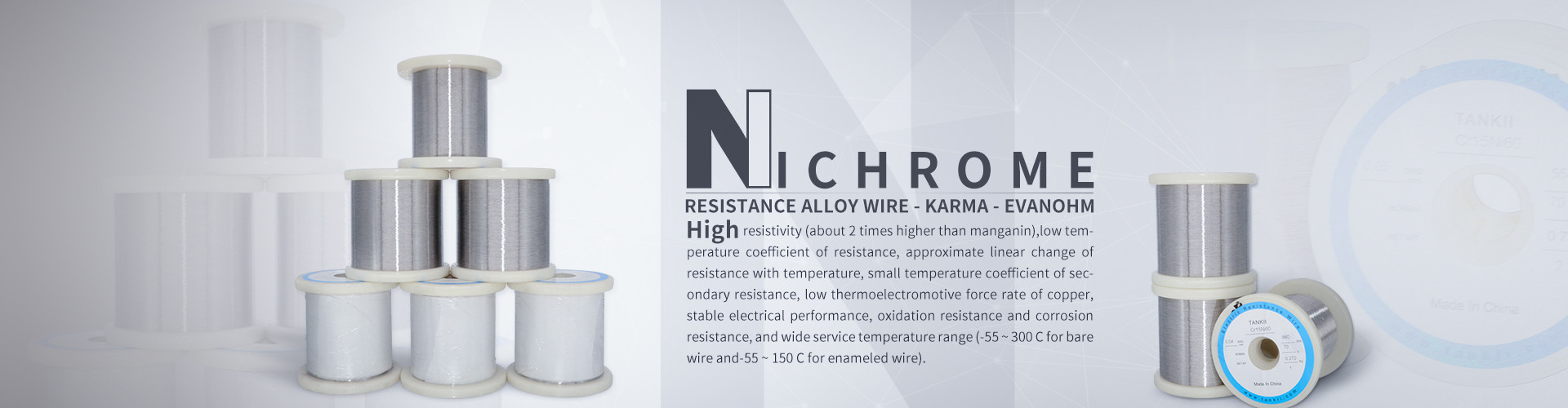
With over 20 years of R&D and manufacturing experience in electric heating alloys, we specialize in providing high-quality nickel-chromium, iron-chromium-aluminum, and copper-nickel resistance alloys for various heating equipment. Ni40Cr20 (also known as Cr20Ni40, Nichrome 40/20) is a distinctive medium-temperature nickel-chromium alloy in our product line – with lower nickel content, it delivers remarkable cost-effectiveness and plays an irreplaceable role in a wide range of household appliances and medium-to-low temperature industrial heating applications. Working closely with hundreds of equipment manufacturers and end-users worldwide, we understand that selecting the right alloy – rather than blindly pursuing "highest temperature, highest nickel" – often provides a more practical engineering solution.
As one of the core materials for electric heat conversion, Ni40Cr20 alloy directly determines:
Cost-effectiveness and design economy of heating elements
Long-term oxidation resistance and dimensional stability in the medium-temperature range
Ease of processing, forming, welding, and assembly
Thermal cycling tolerance and service life
Energy efficiency and maintenance costs of complete equipment
As a specialist manufacturer and solution provider for resistance alloys for over 20 years, we serve industries including home appliance manufacturing, automotive components, HVAC equipment, and electronics. This guide explains not only the specific advantages and application scenarios of Ni40Cr20, but also analyzes key decision points from the perspective of volume purchasing and batch-to-batch consistency.
Why Ni40Cr20 Is the "Best Value Champion in the Medium-Temperature Range"
In the world of electric heating alloys, nickel content generally correlates positively with temperature rating and cost – Ni80Cr20 can withstand up to 1200°C but comes at a high price, while Ni40Cr20 achieves a long-term service temperature of 1100°C with approximately 40% nickel content, striking an excellent balance between cost and performance.
The core advantages of Ni40Cr20 can be summarized in four words: sufficient and affordable.
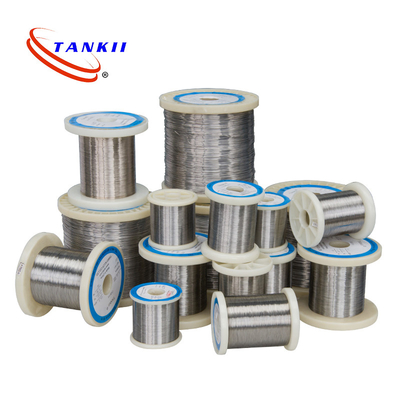
Significant cost advantage: With roughly half the nickel content of Ni80Cr20, raw material costs are substantially reduced, making it an ideal choice for high-volume, medium-to-low temperature heating applications.
Reliable oxidation resistance: Long-term service temperature reaches 1100°C, with a short-term maximum of 1200°C. Under normal operating temperatures, a stable oxide scale forms on the surface, resisting oxidation spallation and embrittlement.
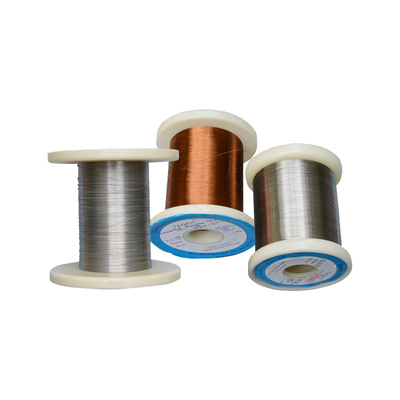
Excellent processability: Offers good ductility and outstanding weldability, easily processed into wire, strip, rod, and various custom shapes.
Good structural stability: Austenitic structure remains stable at high temperatures with minimal grain coarsening, maintaining dimensional stability.
Non-magnetic: Suitable for applications sensitive to magnetic fields.
Selection logic:
Define operating temperature and power requirements → Determine if within medium-temperature range (≤1100°C) → Evaluate cost constraints → Select Ni40Cr20 → Determine supply form (wire/strip/rod) → Evaluate supplier batch consistency
Typical Applications of Ni40Cr20: From Household Appliances to Industrial Equipment
Ni40Cr20 has an extremely wide application scope – from electric blankets in your home to heavy-duty rheostats in factories.
1. Household Appliances and Consumer Heating
This is the largest application area for Ni40Cr20. Its reliability and economy make it the preferred material for numerous domestic electric heating elements.
Night storage heaters and convection heaters: Store heat during off-peak electricity hours and release it during the day. Ni40Cr20's stable heating characteristics ensure reliable long-term thermal storage performance.
Electric blankets and heating pads: Require uniform, gentle heat and are cost-sensitive. Ni40Cr20 can be drawn into fine wire and evenly distributed for a comfortable heating experience.
Baseboard heaters and floor heaters: Operate at low power for extended periods, demanding long life without aging or embrittlement.
Defrost and de-icing elements: Used in refrigerator and freezer defrost heating cables, as well as automotive rear window defrost heating wires.
2. HVAC and Commercial Equipment
Fan heaters: Require rapid heating and frequent start/stop cycles, demanding good thermal shock resistance.
Automotive seat heating: Need flexible, bendable heating wire with strict cost requirements.
3. Industrial and Electrical Equipment
Heavy-duty rheostats and resistors: Require stable operation under high current. Ni40Cr20's high resistivity and good thermal stability make it an ideal choice.
Industrial furnace and oven heating elements: Suitable for medium-to-low temperature industrial electric furnaces, heat treatment furnaces, resistance furnaces, etc., with operating temperatures up to 1100°C.
Electronic components: Heating coils, heating pads, resistors, etc.
Core Material Analysis: Three Key Factors Determining Ni40Cr20 Life and Consistency
Ni40Cr20 may appear compositionally simple – approximately 40% nickel, 20% chromium, balance iron – but to ensure batch-to-batch performance consistency and predictable service life, the following three factors are critical.
1. Precise Control of Chemical Composition
The nominal composition of Ni40Cr20 is Ni 34.0–37.0%, Cr 18.0–21.0%, Fe balance.
Nickel content fluctuation: Nickel directly affects resistivity and oxidation resistance. Deviations can cause batch-to-batch power drift.
Chromium content control: Chromium is essential for forming the protective Cr₂O₃ oxide scale; content fluctuations affect oxidation life.
Impurity element limits: Harmful impurities such as sulfur (S) and phosphorus (P) segregate at grain boundaries and induce cracking at high temperatures. High-quality Ni40Cr20 should have S ≤0.015% and P ≤0.02%.
2. Supply Form and Dimensional Accuracy
Ni40Cr20 can be processed into various forms to suit different applications:
Supply Form
Specification Range
Typical Applications
Cold-drawn wire
Φ0.01–10.00mm
Electric blankets, heating cables, wound resistors
Flat wire/strip
Thickness 0.05–3.5mm, width 5.0–250mm
Resistance strips, rheostats, industrial furnace strip elements
Rod
Φ10.0–20.0mm
Heavy-duty resistors, industrial furnace heating rods
Dimensional tolerances directly affect resistance per unit length. For precision winding applications, diameter tolerance should be controlled within ±0.02mm.
3. Grain Size and Microstructural Uniformity
Ni40Cr20 has an austenitic structure that remains stable at high temperatures.
Grain size affects processability and high-temperature creep resistance.
Control levels vary significantly among manufacturers and batches, directly affecting element deformation rate and service life at high temperatures.
Practical Insights from Our Manufacturing Experience
Over 20 years, we have handled numerous application cases involving Ni40Cr20 and related alloys. Three are most representative.
Case 1: "Local cold spots" in electric blankets
An electric blanket manufacturer using Ni40Cr20 fine wire for the heating layer received customer complaints of "local cold spots." Analysis revealed that wire diameter tolerances were out of spec – sections with smaller diameter had higher resistance and insufficient heating. Lesson: For fine wire (
Lees meer